
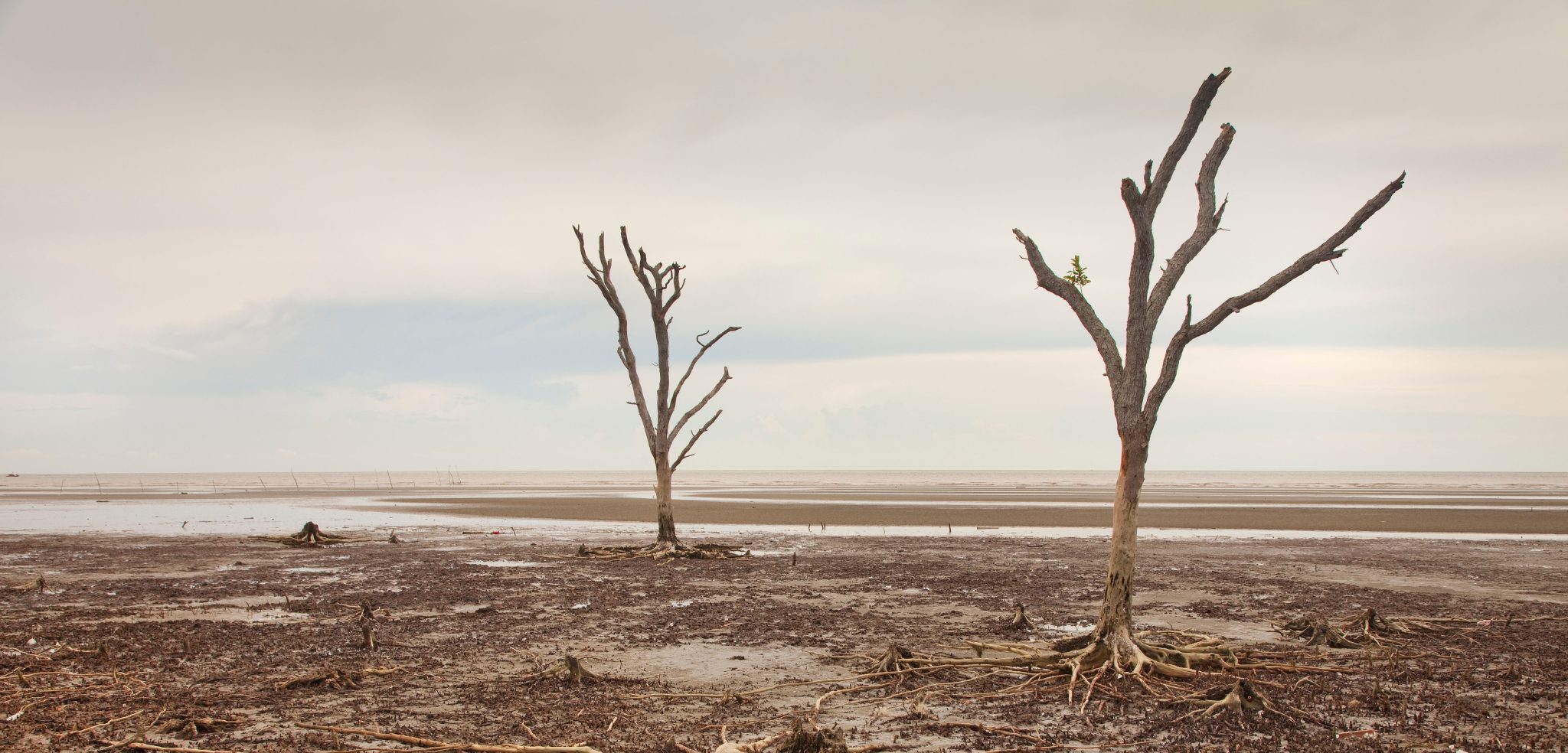
 © Scenics & Science/Alamy Stock Photo
When an earthquake strikes, we count cracked buildings and damaged roads. We rarely look at the forest. But the tremor does not stop at city limits. It fractures soil, shifts water underground, triggers landslides, and leaves stress marks inside tree rings that last for decades. Forests absorb the shock quietly. Some trees fall. Others adapt. Entire ecosystems reorganize. If we ignore what earthquakes do to forests, we miss half the story of resilience.
In Bangladesh, earthquakes are now a major concern and a hot topic of discussion. When we think of earthquakes, our minds often turn to collapsed buildings, human tragedy, and the long road to recovery. Yet forests of our planet’s green guardians also bear the hidden scars of seismic events. Understanding this relationship is vital for both ecological resilience and sustainable development.
Earthquakes are often studied through the lens of human safety and infrastructure resilience, but their ecological consequences, particularly on forests, remain underexplored. This relationship is critical to advancing integrated disaster management and sustainable forestry.
Seismic Impacts on Forest Ecosystems
 Tree rings tell earthquake stories. Near Seattle, scientists analyzed trees killed by a landslide and submerged logs from a nearby lake to confirm a massive 1699 to 1700 earthquake in the Pacific Northwest, the same event that likely triggered the “orphan tsunami” recorded in Japan in 1700. © Gordon Jacoby
Forests act as strong natural buffers. They demonstrate remarkable resilience. While urban infrastructure may be rebuilt within years, forest ecosystems often take decades to recover. Their survival strategies, root adaptation, species migration, and ecological succession offer lessons in patience and persistence.
Forests themselves can mitigate earthquake impacts:
Implications for Bangladesh
Although Bangladesh is not at the epicenter of seismic activity, Himalayan tectonic movements influence downstream ecosystems. Earthquake induced landslides in Nepal and India can alter river systems, sediment flows, and forest landscapes in Bangladesh (MDPI, 2023). This highlights the need for cross border ecological monitoring and regional disaster resilience frameworks.
Strategic Pathways for Action
Since late 2024 and through 2025-2026, in Bangladesh, there has been a noticeable increase in light to moderate tremors (ranging from 3.5 to 5.2 on the Richter scale) (The Daily Star, 2025). While these do not usually cause major damage, they serve as a psychological wakeup call for the public and the government.
Forests are not passive victims of earthquakes, they are dynamic systems that absorb shocks, adapt, and regenerate. By integrating seismic resilience into forest management, Bangladesh can safeguard both ecological integrity and community livelihoods, ensuring that forests remain a cornerstone of resilience in an uncertain seismic future.
* The opinions expressed here are the author’s own and do not represent the official views of Arannayk Foundation.


Comments