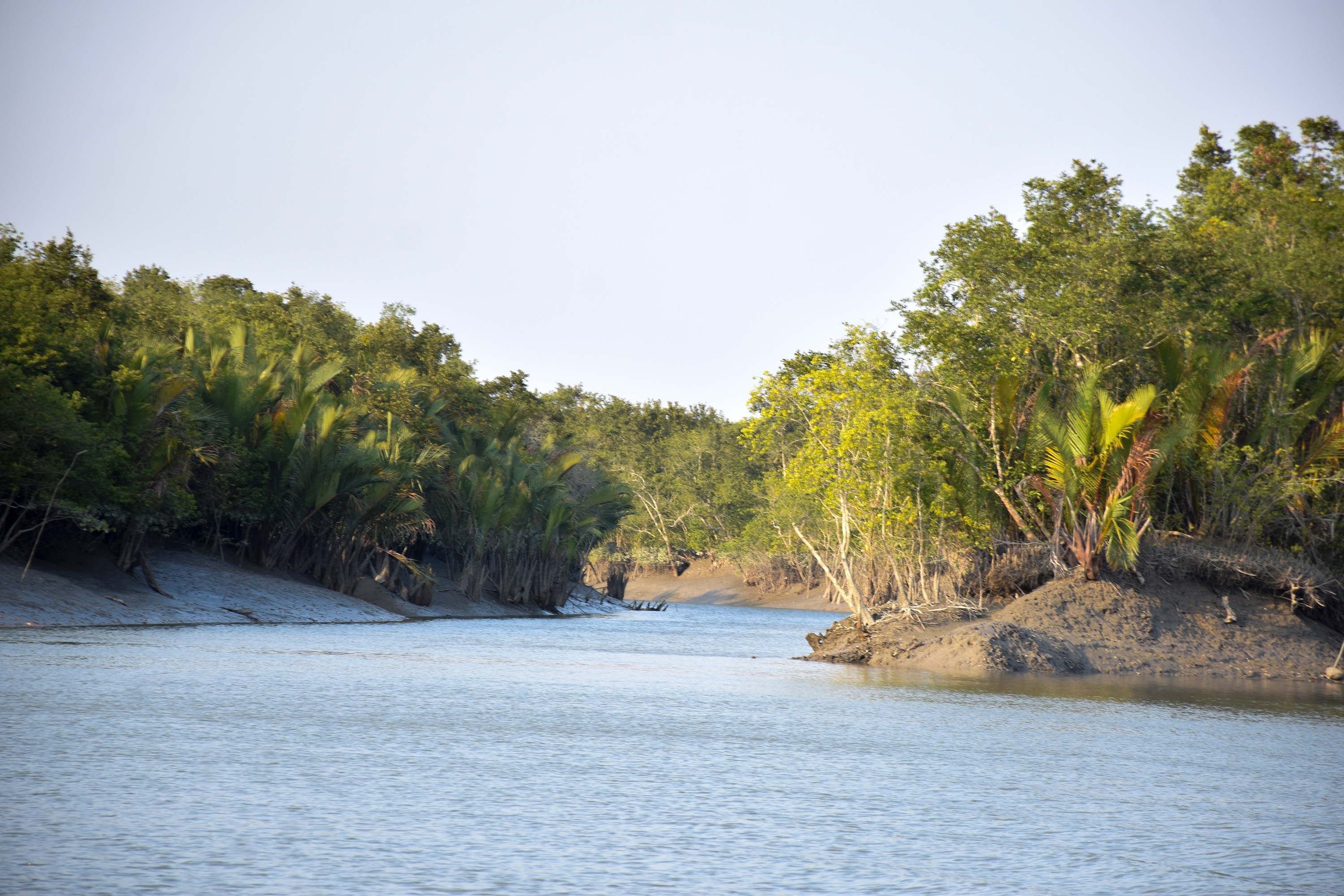
 © Arannayk Foundation/Arifur Rahman
On World Heritage Day, the Sundarbans reminds us that recognition alone cannot protect a living ecosystem. Conservation advances through daily decisions shaped by science. Working with the Bangladesh Forest Department, Arannayk Foundation strengthens ecological monitoring and strategic planning, helping translate evidence into action to sustain this globally significant mangrove landscape.
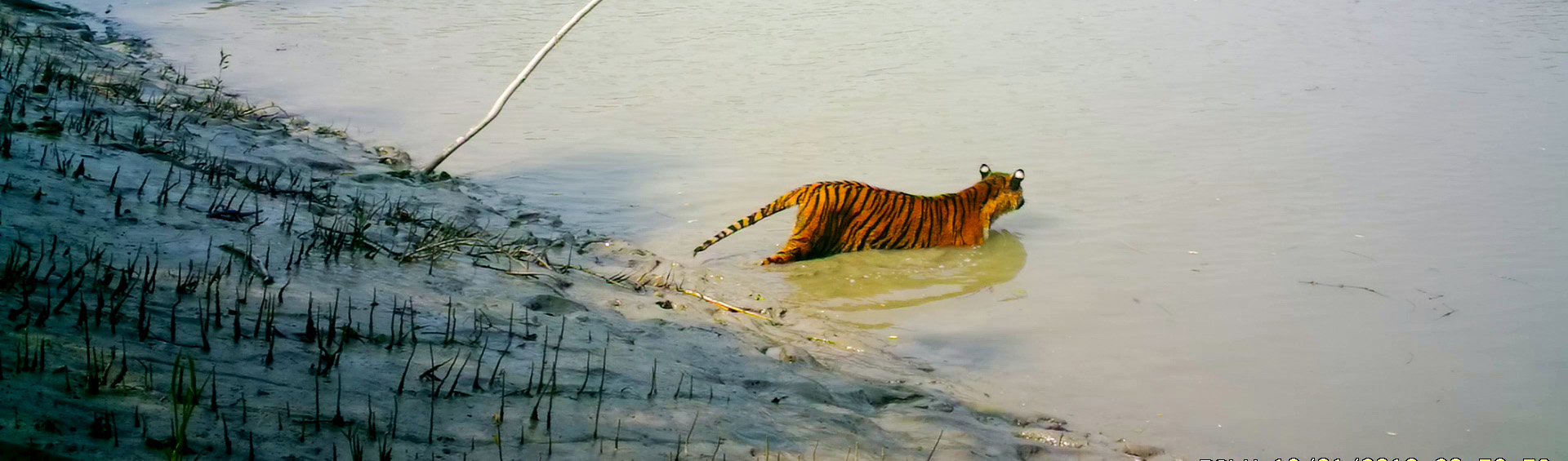 A Bengal Tiger captured in a camera trap while crossing a canal inside the Sundarbans © Arannayk Foundation/Mohammad Shamsuddoha
A Living Heritage in Perspective
Every year, 18 April, observed globally as World Heritage Day, invites us to reflect on places whose value transcends geography, politics, and nationality. These are landscapes and monuments that belong not only to a country, but to humanity itself. Among them, the Sundarbans stands as one of the world’s most extraordinary natural heritage landscapes, a living, breathing ecosystem that embodies ecological resilience, biodiversity richness, and human dependence.
Recognized by UNESCO as a World Heritage Site in 1987 under criteria (ix) and (x), the Sundarbans is the largest contiguous mangrove forest in the world and one of the most biologically productive ecosystems on Earth (UNESCO, 2024; UNESCO World Heritage Centre, n.d.). Yet World Heritage Day should be more than a symbolic observance. It should prompt a deeper question: what does it truly mean to conserve a living heritage site in an era of climate change, biodiversity loss, and increasing human pressure? For the Sundarbans, the answer lies in shared stewardship.
The Bangladesh Forest Department (BFD) remains the statutory guardian and legal custodian of the Sundarban Reserved Forests (SRF), responsible for its management, protection, conservation, and policy oversight. Alongside this institutional leadership, organizations such as Arannayk Foundation work in close collaboration with the BFD, providing support in wildlife crime monitoring surveys, ecological monitoring, the development of the Integrated Resource Management Plan (IRMP), conservation planning, and community-oriented implementation. This partnership reflects a modern conservation reality: heritage survives not through recognition alone, but through collaboration.
A World Heritage Site of Global Ecological Significance
The Sundarbans is not merely a forest. It is an ecological system of immense global importance. Stretching across the delta formed by the Ganges, Brahmaputra, and Meghna river systems, this mangrove landscape provides habitat for the Bengal Tiger, Estuarine Crocodile, Spotted Deer, Fishing Cat, otters, and cetaceans, along with hundreds of species of fish, birds including the critically important Masked Finfoot, reptiles, and invertebrates (UNESCO, 2024). Its significance, however, goes far beyond species diversity.
The Sundarbans performs critical ecological functions that directly support both nature and society. These include nutrient cycling, sediment trapping, shoreline stabilization, carbon sequestration, and storm buffering. For Bangladesh’s vulnerable coastal belt, the forest acts as a natural shield against cyclones, tidal surges, and coastal erosion. The devastating impacts of cyclones such as Sidr and Aila powerfully reinforced the role of this mangrove system as an ecological defense infrastructure. Thus, the Sundarbans is both a biodiversity hotspot and a climate resilience asset. This dual significance is precisely why UNESCO recognizes it as a site of Outstanding Universal Value (OUV).
Bangladesh Forest Department as the Statutory Guardian
It is important to clearly acknowledge that the Forest Department is the principal guardian of the Sundarbans. As the government’s legally mandated institution, the BFD is entrusted with forest governance, law enforcement, habitat protection, wildlife conservation, and long-term management planning for the Sundarbans Reserve Forest. This statutory role is central to World Heritage conservation.
UNESCO inscription does not replace national custodianship; rather, it reinforces the responsibility of the designated management authority. In Bangladesh, that authority is the Forest Department. Its responsibilities include controlling illegal extraction, managing human-wildlife conflict, regulating resource access, restoring degraded habitats, strengthening patrol systems, and ensuring compliance with international conservation commitments. In many ways, the ecological health of the Sundarbans reflects the institutional strength of the Forest Department. Yet in today’s complex socio-ecological reality, no single institution can work alone.
 A camera trap installed by Arannayk Foundation to monitor crime-prone hotspots for tiger and deer poaching in the Sundarbans. © Arannayk Foundation/Mohammad Shamsuddoha
Arannayk Foundation as a Strategic Collaborating Partner
This is where the role of the Arannayk Foundation becomes particularly significant. Rather than serving as the statutory guardian, Arannayk functions as a technical, scientific, and implementation partner working closely with the Bangladesh Forest Department. While the Forest Department retains the legal mandate for custodianship and governance, Arannayk strengthens that mandate through science-based evidence, field implementation, and strategic planning support.
Its contributions are substantial, knowledge-driven, and aligned with long-term ecosystem stewardship.
Under the Protection of Sundarban Mangrove Forests Project (PSMFP), Arannayk supports long-term ecological monitoring to inform evidence-based management decisions (Arannayk Foundation, n.d.-a). This includes systematic monitoring of reptile and amphibian populations, fisheries resources, soil and water quality, habitat conditions, and other key biological and environmental indicators. Importantly, this work is funded by the Bangladesh Forest Department, reinforcing the collaborative and state-supported nature of the partnership.
This is a critical point. Conservation in the twenty-first century depends on data, diagnostics, and adaptive management. Without ecological evidence, management decisions risk becoming reactive, fragmented, and short-term. Through scientific monitoring and evaluation, Arannayk helps build a stronger knowledge base that directly supports the Forest Department’s custodial role and translates policy commitments into measurable conservation outcomes.
From Field Evidence to Strategic Conservation
A significant area of work is the assessment of aquatic resources of the Sundarbans, focusing on the status, abundance, and distribution of fish, crabs, and other ecologically important aquatic fauna. This is particularly substantial in an estuarine ecosystem where aquatic biodiversity underpins food webs, local livelihoods, fisheries productivity, and ecosystem services. By generating scientific information, the initiative supports both biodiversity conservation and sustainable resource management.
Another important intervention is the monitoring of 27 crime-prone hotspots for tiger and deer poaching through camera trapping. This directly addresses threats to the ecological integrity of the World Heritage Site. By identifying spatial and temporal patterns of poaching risk, the initiative strengthens anti-poaching patrols, enforcement mechanisms, and wildlife protection strategies, enabling the Forest Department to optimize surveillance and improve law enforcement outcomes. This is not simply wildlife monitoring. It is a direct defense of the ecological values for which the Sundarbans was inscribed as a World Heritage Site.
A third major collaboration lies in the Integrated Resource Management Plan (IRMP), which serves as the long-term strategic framework for sustainable management of the Sundarbans. This includes capacity building of Forest Department officials, infrastructure and communication improvement, adoption of information technologies, enhanced patrolling, wildlife and habitat surveys, aquatic resource assessment, climate change impact evaluation, and the development of a scientific monitoring and forest management system. From a policy perspective, this is one of the most strategic contributions, as the IRMP acts as the institutional roadmap for the future of the Sundarbans.
Finally, the ecological monitoring program under PSMFP reflects a systems-based conservation approach, regularly tracking key ecosystems, species, and environmental indicators based on ecological significance and vulnerability. Monitoring species populations, habitat health, salinity, and water quality provides the foundation for adaptive management, enabling conservation responses to evolve with changing ecological realities, including climate change. Taken together, these interventions show that Arannayk’s role extends well beyond project implementation. It strengthens the institutional and scientific capacity of the Forest Department to protect one of the world’s most important natural heritage landscapes.
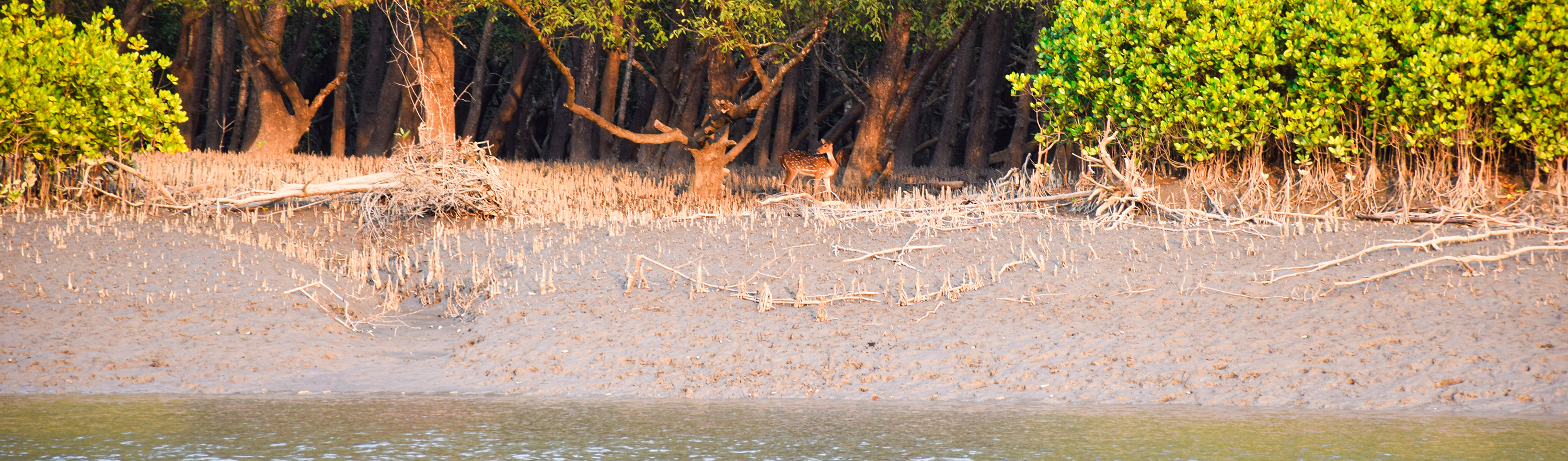 A spotted deer in the Sundarbans seeking shade during a hot sunny day © Arannayk Foundation/Arifur Rahman
Empirical Evidence of Collaborative Impact
The collaboration between the Bangladesh Forest Department (BFD) and Arannayk Foundation has already generated several important outcomes that strengthen the conservation of the Sundarbans and its status as a World Heritage Site:
Scaling Evidence-Based Management: The Way Forward
The collaboration between the Bangladesh Forest Department and Arannayk Foundation has laid an important foundation for science-based stewardship of the Sundarbans. However, the future of this World Heritage Site will depend on how this partnership evolves in response to emerging ecological and institutional challenges. Key priorities for the way forward include:
Heritage Survives Through Institutions, Evidence, and Partnership
World Heritage status is an honor. But honor alone does not protect a forest. The Sundarbans will not endure because it is listed by UNESCO. It will endure because institutions remain strong, science remains credible, and partnerships remain functional. That is the sharp lesson of World Heritage Day. The Forest Department provides legal guardianship. Arannayk Foundation strengthens that guardianship through knowledge, planning, and field evidence. Together, they represent a model of collaborative stewardship that is essential for the future of living heritage sites. In an age of climate uncertainty and rising ecological pressure, conservation must move beyond symbolic recognition toward institutional resilience and evidence-based action.
The Sundarbans is not simply a heritage site to be admired. It is a living system that must be defended. And history will judge us not by how proudly we celebrated it, but by how effectively we protected it.
* The opinions expressed here are the author’s own and do not represent the official views of Arannayk Foundation.


Comments