
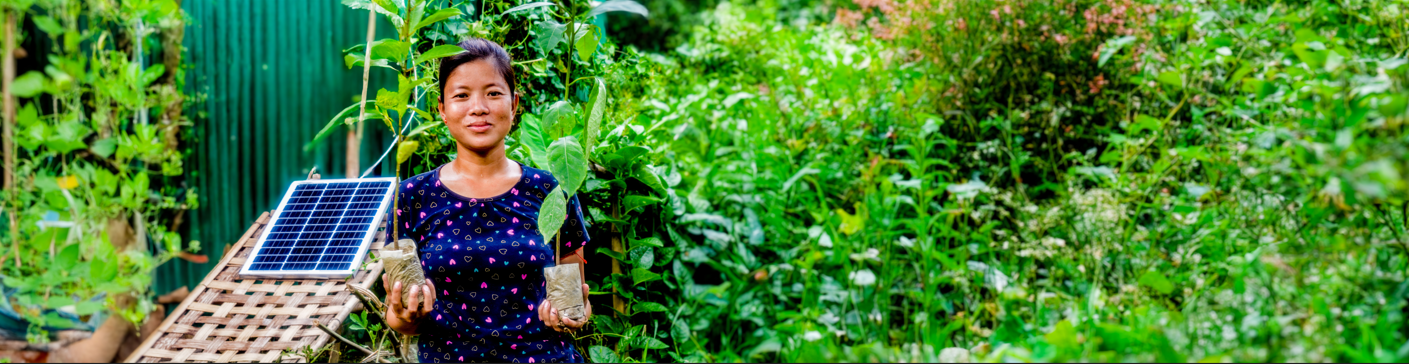
 © Arannayk Foundation photo library
Energy transition is often treated as a technical challenge. In Bangladesh, its stability also depends on ecosystems that reduce climate risk, protect infrastructure, and ease pressure on fuelwood use. This International Mother Earth Day 2026 piece examines how restoration, community stewardship, and Arannayk Foundation’s work strengthen the conditions that make clean energy viable.
Power Beyond Energy Systems
Earth Day 2026, under the theme “Our Power, Our Planet,” reflects a global shift toward integrating renewable energy transition with broader systems of ecological stability and social participation (EarthDay.org, 2026). The theme emphasizes that environmental transformation depends not only on technological change but also on collective human agency across institutions, communities, and ecosystems (IPCC, 2022).
In Bangladesh, this framing is particularly relevant because environmental systems are tightly interwoven with livelihoods, land use, and climate vulnerability (World Bank, 2020). The concept of “power” therefore extends beyond electricity generation to include the ability of ecosystems and communities to sustain resilience under climate stress (Millennium Ecosystem Assessment, 2005). Forests, wetlands, and rural landscapes function as critical ecological infrastructure that regulates climate, water systems, and disaster risk (FAO, 2020). These systems directly influence development outcomes, including energy security and infrastructure stability (IPCC, 2022).
Within this milieu, nature-based organizations such as Arannayk Foundation is contributing to ecosystem restoration and community-based conservation, which indirectly supports climate adaptation and resilience-building processes in Bangladesh (Arannayk Foundation, n.d.).
Energy Transition in Bangladesh: Progress and Structural Limits
Bangladesh has expanded renewable energy deployment, particularly through solar home systems that have improved electricity access in rural areas (World Bank, 2020). These decentralized systems have played a significant role in increasing energy inclusion in off-grid regions (World Bank, 2020). However, renewable energy still represents a small portion of the national electricity mix, with fossil fuels continuing to dominate energy generation (International Energy Agency , 2023). This structural dependence reflects both infrastructure limitations and land-use constraints (IEA, 2023). Energy systems in Bangladesh are also highly vulnerable to climate impacts, including cyclones, flooding, and salinity intrusion, which can disrupt transmission infrastructure and generation capacity (IPCC, 2022). These vulnerabilities highlight that energy security is closely linked to environmental stability (IPCC, 2022).
As a result, energy transition cannot be treated purely as a technological shift. It must also address ecological resilience and land system stability (FAO, 2020).
Forests as Climate and Energy Infrastructure
Forest ecosystems provide essential regulating services that support both ecological and economic systems (Millennium Ecosystem Assessment, 2005). These include climate regulation, water cycle stabilization, and soil protection, all of which are critical for national resilience (FAO, 2020). In Bangladesh, mangrove forests such as the Sundarbans act as natural barriers against cyclones and storm surges, reducing disaster impacts on coastal populations (Giri et al., 2015). These ecosystems also support fisheries and livelihoods that are central to coastal economies (Giri et al., 2015). The Sundarbans covers approximately 10,000 square kilometers across Bangladesh and India, making it the largest contiguous mangrove forest in the world (Giri et al., 2015). Its ecological services include carbon sequestration, coastal protection, and biodiversity conservation (IPCC, 2022).
Forest degradation increases exposure to climate risks and weakens infrastructure resilience, including energy systems located in vulnerable regions (IPCC, 2022). Therefore, forests function as natural infrastructure that indirectly supports energy stability and disaster risk reduction.
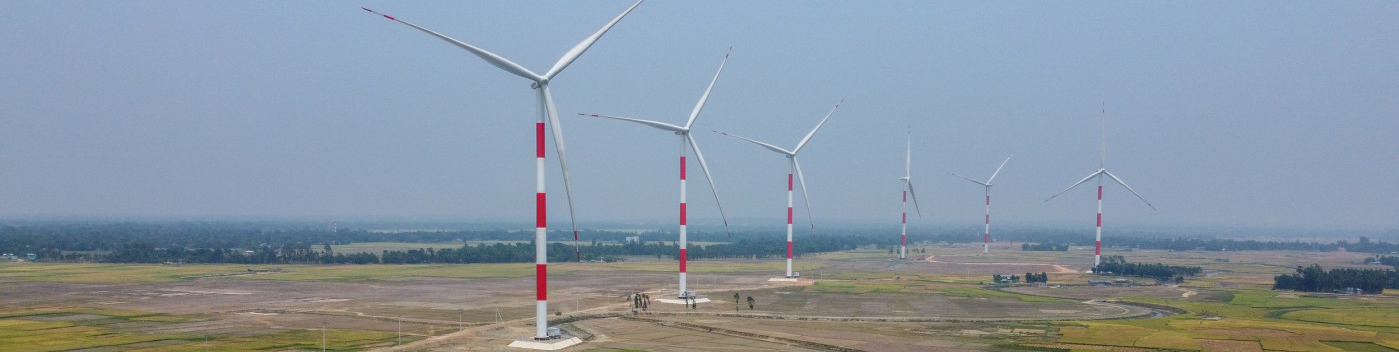 Bangladesh’s first wind based power plant at Khurushkul, Cox’s Bazar began commercial production on 8 March 2024. © TBS/Syed Zakir Hossain
Bangladesh Context: Forest Pressure and Energy Demand
Bangladesh is experiencing increasing energy demand due to population growth, urbanization, and industrial expansion (IEA, 2023). At the same time, forest ecosystems face pressure from land-use change, resource extraction, and climate impacts (FAO, 2020). Natural forest cover in Bangladesh is limited and fragmented, with ongoing degradation in several regions (FAO, 2020). Although plantation forestry and social forestry initiatives have expanded tree cover, ecological quality and biodiversity value remain uneven (FAO, 2020). In rural and forest-adjacent communities, biomass remains a primary energy source, particularly for cooking (World Bank, 2020). Dependence on fuelwood continues to exert pressure on nearby forest ecosystems (World Bank, 2020).
This creates a feedback loop where limited clean energy access increases forest dependency, while forest degradation reduces ecosystem services and increases vulnerability to climate shocks (IPCC, 2022). Climate change further intensifies this cycle through more frequent extreme weather events (IPCC, 2022). Breaking this cycle requires integrated interventions across energy access, ecosystem restoration, and rural livelihoods (FAO, 2020).
Ecosystem-Based Development: Arannayk Foundation’s Experience
Arannayk Foundation is a Bangladesh-based conservation organization working on forest restoration, biodiversity conservation, and community-based natural resource management (Arannayk Foundation, n.d.). Its approach emphasizes landscape-level ecological restoration combined with community engagement (Arannayk Foundation, n.d.).
Forest landscape restoration initiatives supported by the organization aim to restore degraded ecosystems while improving ecological connectivity and biodiversity (Arannayk Foundation, n.d.). These interventions contribute to long-term ecological resilience by improving soil stability, water regulation, and habitat restoration (FAO, 2020).
Community participation is central to this model, with local stakeholders involved in planning, implementation, and monitoring of conservation activities (Arannayk Foundation, n.d.). This approach aligns with global evidence showing that community-based natural resource management improves conservation outcomes and sustainability (Agrawal & Gibson, 1999).
In addition, livelihood diversification programs reduce dependence on forest extraction, thereby lowering pressure on natural ecosystems (Arannayk Foundation, n.d.). This contributes indirectly to energy transition by reducing biomass dependence in rural areas (World Bank, 2020).
Forest Restoration as a Climate and Energy Strategy
Forest restoration plays a critical role in climate mitigation through carbon sequestration and ecosystem recovery (IPCC, 2022). Global assessments show that forests are among the most effective natural climate solutions due to their carbon storage capacity and ecosystem services (FAO, 2020). Beyond carbon storage, restored forests improve hydrological stability, reduce erosion, and enhance agricultural productivity (Millennium Ecosystem Assessment, 2005). These functions are particularly important in Bangladesh, where climate variability affects rural livelihoods and food security (IPCC, 2022). From an energy perspective, forest restoration reduces reliance on biomass energy by improving access to alternative livelihoods and sustainable resource systems (World Bank, 2020). Reduced fuelwood dependence decreases pressure on forests and supports ecosystem recovery (FAO, 2020).
Arannayk Foundation’s restoration work in degraded landscapes contributes to these outcomes by improving ecological function and supporting community resilience (Arannayk Foundation, n.d.).
Community-Based Conservation and Local Power
Community-based natural resource management is widely recognized as an effective approach for achieving sustainable conservation outcomes (Agrawal & Gibson, 1999). Local participation improves compliance, monitoring, and long-term sustainability of environmental interventions (Agrawal & Gibson, 1999).
In Bangladesh, community engagement is particularly important due to high population density and dependence on natural resources (World Bank, 2020). Local communities often play a direct role in managing forests and adjacent landscapes (FAO, 2020). Arannayk Foundation integrates community participation into its conservation framework by involving local stakeholders in decision-making and implementation processes. This strengthens governance systems at the local level and improves resource management (Arannayk Foundation, n.d.). Empowering communities also enhances adaptive capacity to climate risks, which is increasingly important under changing environmental conditions (IPCC, 2022).
Renewable Energy Expansion and Land-Use Constraints
Renewable energy development in Bangladesh, particularly solar energy, requires significant land resources for large-scale installations (IEA, 2023). This creates competition between energy infrastructure, agriculture, and ecological systems (IEA, 2023). Without integrated spatial planning, renewable energy expansion may lead to unintended land-use conflicts or ecological pressure (FAO, 2020). Therefore, energy planning must incorporate environmental sensitivity and land suitability assessments (IPCC, 2022). Prioritizing degraded or non-productive land for renewable energy development can help reduce ecological trade-offs while supporting energy expansion (IEA, 2023). This requires coordinated planning between energy, environment, and land-use institutions (FAO, 2020).
Policy Fragmentation and Institutional Gaps
Environmental governance in Bangladesh remains fragmented across sectors, including energy, forestry, agriculture, and climate adaptation (FAO, 2020). This fragmentation reduces policy efficiency and limits cross-sectoral coordination (IPCC, 2022). Energy policies often do not fully integrate biodiversity or ecosystem considerations, while conservation programs may not be linked to energy access strategies (World Bank, 2020). Similarly, climate adaptation efforts are frequently implemented independently of development planning frameworks (IPCC, 2022). This institutional separation limits the effectiveness of sustainability interventions. Integrated policy frameworks are therefore required to align environmental, energy, and development objectives (FAO, 2020).
Pathways Toward 2030 Integration
Achieving global climate and energy targets by 2030 requires coordinated action across sectors (IPCC, 2022). In Bangladesh, this includes integrating ecosystem restoration into energy planning and development strategies. Key priorities include strengthening forest restoration programs, expanding community-based conservation, and ensuring renewable energy expansion is environmentally sustainable (FAO, 2020). Additionally, livelihood diversification must be prioritized to reduce pressure on natural ecosystems (World Bank, 2020). Arannayk Foundation’s work demonstrates practical models for implementing these integrated approaches at the landscape level (Arannayk Foundation, n.d.).
Interconnected Systems, Shared Future
The Earth Day 2026 theme emphasizes that environmental solutions depend on collective power and systemic integration (EarthDay.org, 2026). In Bangladesh, this means recognizing that forests, energy systems, and communities are interconnected components of a single socio-ecological system. Forest ecosystems function as natural infrastructure that supports climate stability, disaster resilience, and economic security (IPCC, 2022). Energy systems depend on this stability, while communities depend on both for livelihoods and survival. Organizations such as Arannayk Foundation demonstrate that integrated approaches combining restoration, conservation, and community engagement can contribute meaningfully to national resilience (Arannayk Foundation, n.d.).
A sustainable future for Bangladesh will depend not only on renewable energy expansion but also on the health of its forests and ecosystems. The future of energy and the future of nature are therefore inseparable.
References
1. Agrawal, A., & Gibson, C. C. (1999). Enchantment and disenchantment: The role of community in natural resource conservation. World Development, 27(4), 629–649.
2. Arannayk Foundation. (n.d.). Projects and programs. https://www.arannayk.org/
3. EarthDay.org. (2026). Earth Day 2026 theme: Our Power, Our Planet. https://www.earthday.org/
4. Food and Agriculture Organization (FAO). (2020). Global Forest Resources Assessment 2020. FAO.
5. Giri, C., Long, J., Abbas, S., Murali, R. M., Qamer, F. M., Pengra, B., & Thau, D. (2015). Distribution and dynamics of mangrove forests of South Asia. Journal of Environmental Management, 148, 101–111.
6. Intergovernmental Panel on Climate Change (IPCC). (2022). Climate Change 2022: Impacts, Adaptation and Vulnerability. Cambridge University Press.
7. International Energy Agency (IEA). (2023). World Energy Outlook 2023. IEA.
8. Millennium Ecosystem Assessment. (2005). Ecosystems and Human Well-being. Island Press.
9. World Bank. (2020). Bangladesh: Scaling up renewable energy. World Bank Group.
* The opinions expressed here are the author’s own and do not represent the official views of Arannayk Foundation.
Comments