March 1, 2026
by Arifur Rahman
A tiger crosses a village path. An elephant herd meets a line of tin houses. In Bangladesh, wildlife does not live in the distance. It lives at our door.
There are 125 Bengal Tigers in Bangladesh Sundarbans today – a slight rise.
Asian Elephants number between 228 and 327 – a steep fall.
Corridors are blocked. In five years, 83 people have died in elephant encounters. Elephants are dying too.
This problem is not created by the wildlife, rather its a land use problem.
Arannayk Foundation works where conflict happens, building response teams, restoring corridors, protecting coasts. The goal is not romantic but practical. Make coexistence possible before it comes harder.
In Bangladesh, wildlife is not far away. It moves along village paths. It crosses shrimp estates. It nests on busy beaches.
Conservation here is not a slogan for one day. It is a daily negotiation between survival and space.
At Arannayk Foundation, we operate in these shared landscapes where wildlife and communities meet, often without warning.
Habitat loss, expanding infrastructure, and climate stress have narrowed the margins for every species.
Here, managing wildlife means, first and foremost, managing coexistence.
 A Royal Bengal Tiger crossing a canal inside the Sundarbans, captured in a camera trap set by Arannayk Foundation. © Arannayk Foundation/Mohammad Shamsuddoha
The Numbers: A Glimmer of Hope Amidst Crisis
Recent data offers a complex narrative regarding our most iconic species. According to the 2023-2024 Tiger Survey conducted by the Forest Department, the Royal Bengal Tiger population in the Sundarbans has increased to 125 individuals, up from 114 in 2018 (BSS, 2024). While this suggests that protection measures are working, the survival of these apex predators remains "highly vulnerable" due to prey depletion and the rising salinity of their habitat.
 © Arannayk Foundation
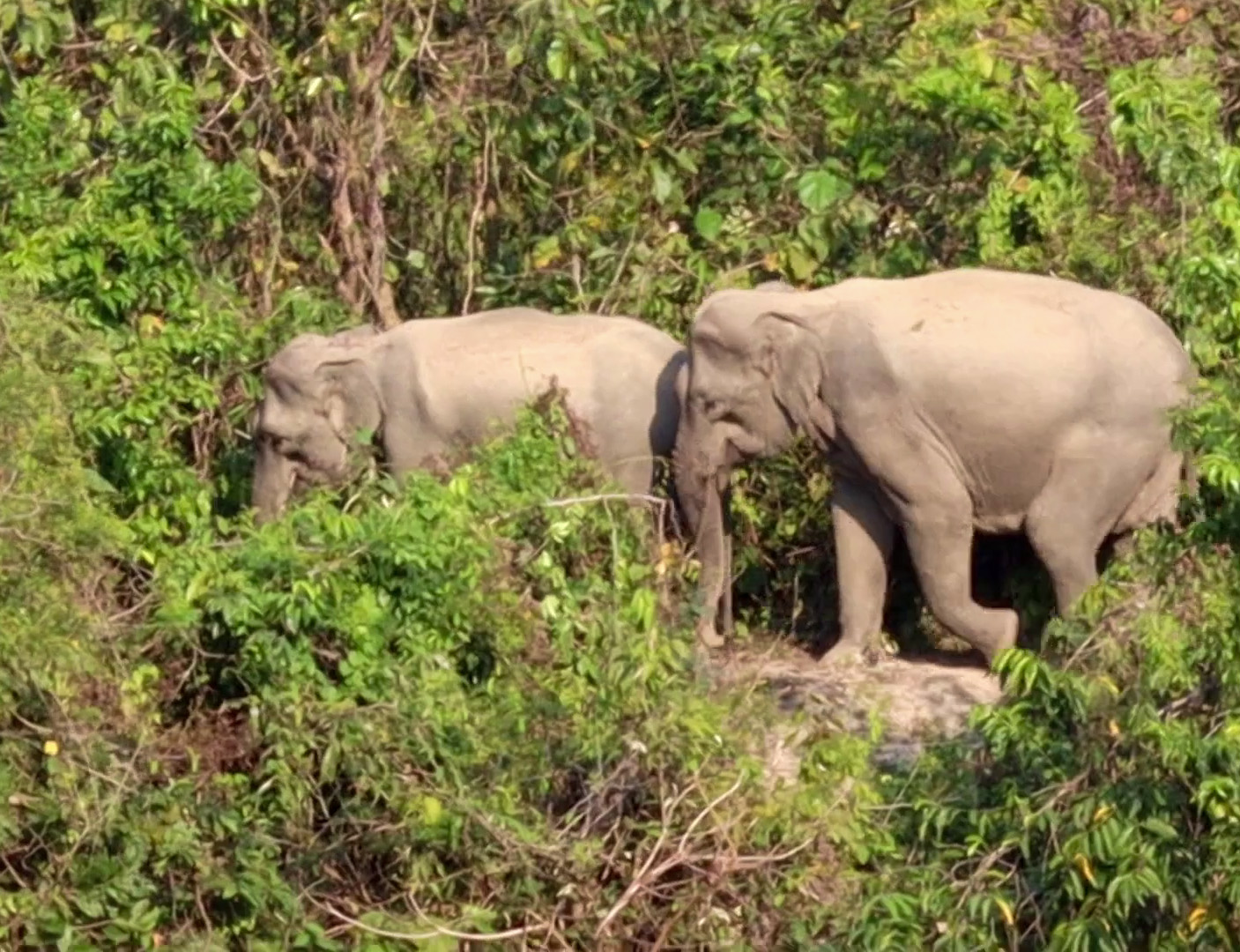
Conversely, our giants of the forest, the Asian Elephants are in a far more precarious position. Current estimates place the resident population between 228 and 327 (IUCN Bangladesh, 2023). These numbers are a shadow of the herds that roamed our hills just half a century ago.
The Intersection of Conflict and Development
The most critical problem facing our wildlife today is Human-Wildlife Conflict (HWC), specifically regarding elephants. This is the direct result of catastrophic habitat fragmentation.
- Blocked Corridors: Research highlights that many traditional elephant migration corridors are now severely encroached upon. Large-scale settlements in the Cox's Bazar region have effectively trapped herds, leading to a spike in dangerous encounters (The Business Standard, 2024).
- The Human and Wildlife Cost: Between 2019 and 2023, at least 83 people lost their lives in human-elephant encounters (The Business Standard, 2024). In retaliation and through accidents like electrocution, elephant deaths have also surged, with 34 elephants killed in 2021 alone - the highest in a single year (Prothom Alo, 2021).
The Climate-Conservation Nexus
Climate change is the "silent killer" of our biodiversity. The National Adaptation Plan (2023–2050) warns that sea-level rise and increasing salinity in the Sundarbans are fundamentally altering the vegetation (MoEFCC, 2022). As the "Sundari" trees decline, the habitat suitability for spotted deer (the tiger's primary prey) diminishes, forcing tigers closer to human settlements in search of food.
Furthermore, research published in MDPI Animals indicates a significant gap in conservation practices. A study on Knowledge, Perception, and Practices reveals that while awareness is higher among urban youth, rural communities on the front lines of HWC often lack access to legal frameworks and sustainable mitigation strategies (Shawon et al., 2024).
 Members of a Community Patrol Group before participating a beach cleaning activity at Cox's Bazar. © Arannayk Foundation
Arannayk’s Commitment: Safeguarding Wildlife Through Community Engagement
The Arannayk Foundation works across forests, coasts, and mangroves to bridge this gap through practical, community-centered interventions. Our commitment is rooted in the belief that conservation only succeeds when local communities are empowered as guardians.
1. Mitigating the Elephant Crisis
Our elephant conservation efforts focus on reducing conflict by strengthening local preparedness. We facilitate the formation of Elephant Response Teams (ERTs) and promote the use of non-harming deterrents, such as chili-coated ropes and early warning practices. By encouraging the cultivation of non-preferable crops, we help farmers protect their livelihoods without harming the majestic giants passing through.
2. Protecting Big Cats Beyond Borders
For tiger conservation, we combine landscape-scale collaboration with site-specific protection. Through our transboundary initiative, "Beyond Border: Securing Big Cats and Their Habitats," we work across the Chittagong–Lushai Landscape of Bangladesh and India to ensure habitat connectivity. In the Sundarbans, we utilize targeted camera trapping to monitor 27 crime-prone hotspots for tiger and deer poaching, significantly boosting field-level enforcement.
3. Coastal and Hill Tracts Resilience
Our reach extends to the busy coastlines where we operate a sea turtle hatchery in Inani, Cox’s Bazar. By protecting nesting beaches and working with fishing communities to reduce bycatch risks, we ensure a safer journey for marine life. Simultaneously, we advocate for the Western Hoolock Gibbon, using platforms like International Gibbon Day to draw urgent attention to their declining habitats.
The Path Forward: Diplomacy and Ecology
Our strategy is shifting toward a more holistic approach. As noted in the Bangladesh National Conservation Strategy, we are now looking toward "Transboundary Conservation" and institutional collaboration (Forest Department, 2024).
Conservation in 2026 is as much about urban planning and poverty alleviation as it is about biology. We cannot protect the tiger if we do not protect the honey-gatherer; we cannot save the elephant if we do not provide the farmer with alternative crops and safety. Through integrated wildlife management, Arannayk Foundation remains committed to a future where people and wildlife thrive in the same landscape.
* The opinions expressed here are the author’s own and do not represent the official views of Arannayk Foundation.
Arifur Rahman is the Head of Communications and Advocacy at Arannayk Foundation.
Related Stories


Comments