
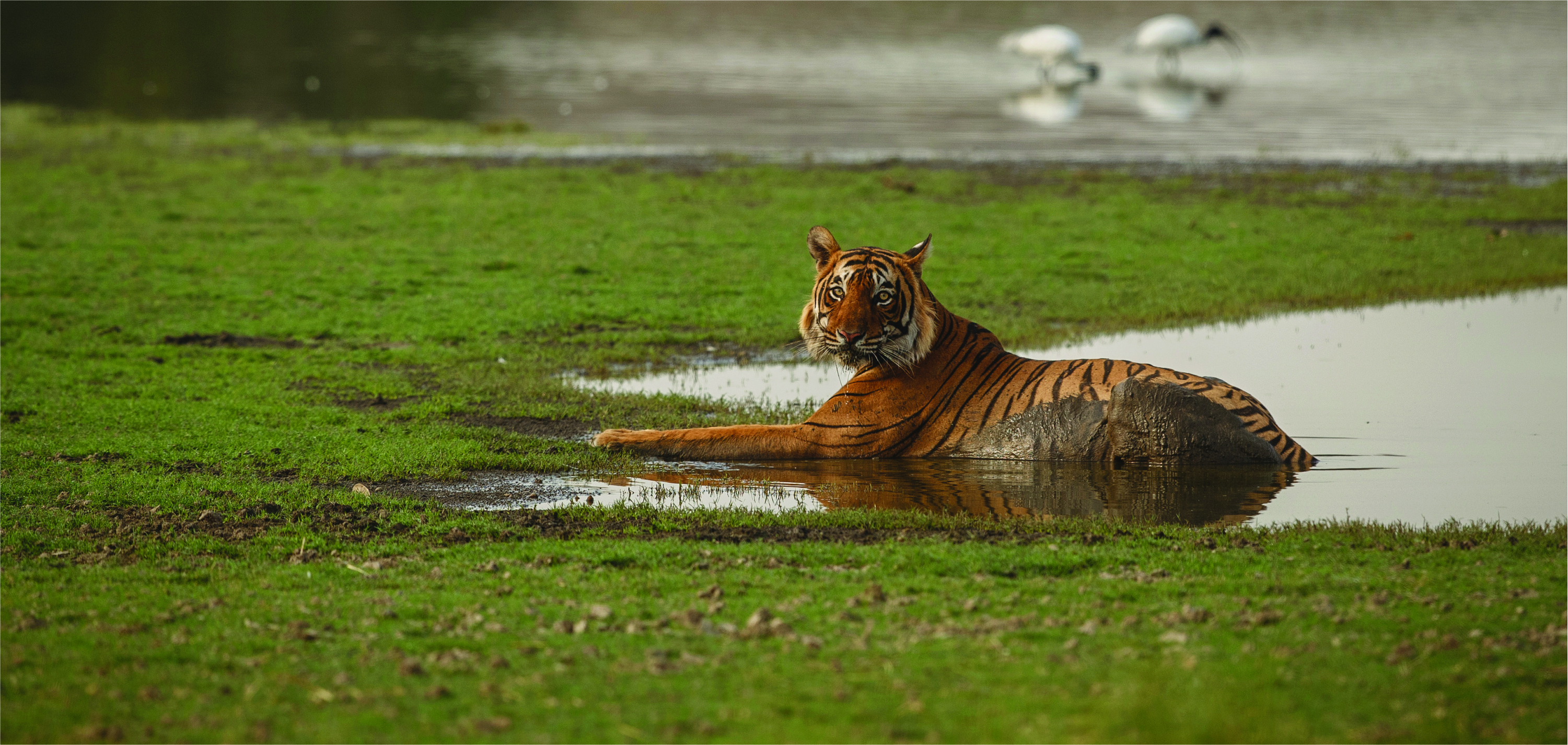
 © Anupam Mukherjee via Wikimedia Commons (CC BY-SA 4.0)
Global Tiger Day 2026 should be measured by coexistence. Bangladesh's Sundarbans population has grown to 125 tigers with 21 cubs recorded in the latest census, supported by fencing, shelters, and village response teams. But the forest is near its ecological ceiling, and pressures from poaching, salinity, and cyclones remain. Arannayk Foundation contributes through hotspot monitoring, the 2025–2035 management plan, aquatic resource assessment, and the Beyond Border project on big cats in the Chittagong–Lushai landscape. The real test is whether people living beside the forest feel safer even with the increasing number of this mystic predator.
Every year on 29 July, the world marks Global Tiger Day, a commitment born at the 2010 St. Petersburg Tiger Summit, where thirteen tiger-range countries adopted the Tx2 goal of doubling wild tiger numbers by 2022 (IUCN, 2020). Here the day is not an abstract international observance. It speaks to the Sundarbans, the only mangrove forest on Earth that shelters a breeding population of wild tigers, and to the inseparable six million people’s community living across the districts fringing that forest.
Coexistence, rather than headcount alone, is the more honest lens for this moment, because a rising tiger population only counts as progress if the people sharing that landscape experience it as safety rather than risk. Measured against that standard, Bangladesh's story in 2026 is genuinely encouraging, and genuinely unfinished.
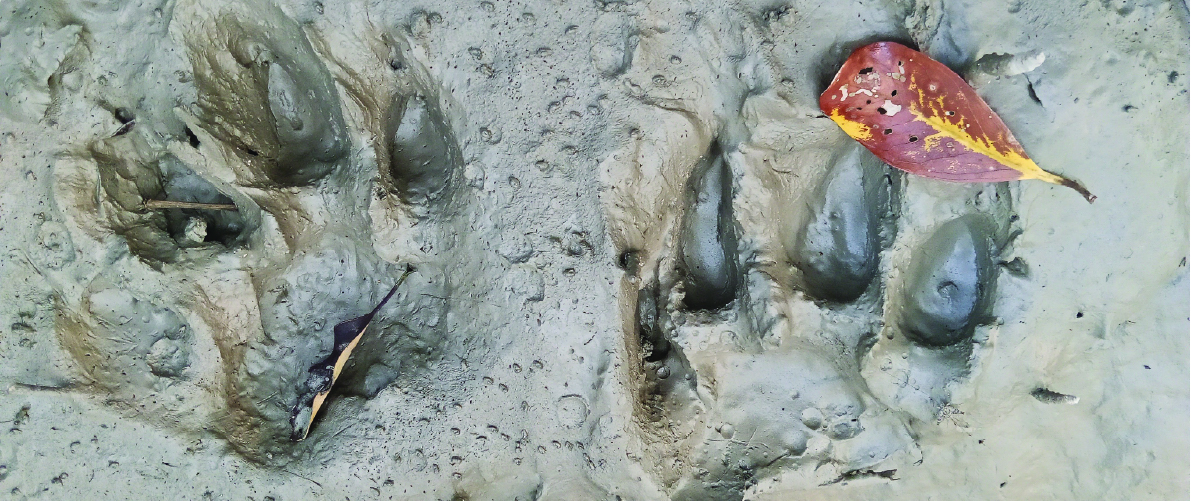 Pugmark of a tiger in mud at the Sundarban
What Coexistence Has Produced So Far
The most recent authoritative count, the Sundarbans Tiger Census 2024, put Bangladesh's tiger population at 125 individuals, up from 114 in 2018 and 106 in 2015 (Business Standard, 2024a; New Age, 2024). Released by the Ministry of Environment, Forest and Climate Change in October 2024, the survey deployed 1,210 camera traps across 605 grids over 318 days between January 2023 and March 2024 (Prothom Alo, 2024). Tiger density now stands at 2.64 individuals per 100 square kilometers, a 9.65 percent increase since 2018 and a 17.92 percent increase since 2015 (Business Standard, 2024a).
Read as a coexistence indicator rather than a raw number, the more telling detail is this: the same survey recorded 21 tiger cubs, more than four times the five cubs documented across the 2015 and 2018 surveys combined, though officials excluded these from the headline total given high natural mortality among cubs (Dhaka Tribune, 2024; New Age, 2024). That growth has tracked closely with measures designed to keep tigers and people safely apart: roughly 60 kilometers of nylon net fencing along forest-adjacent villages, twelve emergency shelters for animals during cyclones and floods, and 49 Village Tiger Response Teams (VTRT) trained to guide a straying tiger back into the forest rather than let an encounter end violently on either side (New Age, 2024). In a landscape this constrained, coexistence infrastructure and population recovery have effectively become the same project. A recent illustration came this July, when the Sundarbans East forest division prepared to release a rehabilitated tigress back into the wild after treating a severe snare injury to her foreleg, the country's first such release of its kind (Mongabay, 2026).
Still, 125 tigers in a forest capable, by some expert estimates, of supporting up to 150, is a population living close to its ecological ceiling, confined to a single, shrinking, increasingly saline delta of roughly 6,017 square kilometers, of which about 4,832 square kilometers is forestland (Dhaka Tribune, 2024). Bangladesh's tigers have nowhere else to go, which raises the stakes on getting coexistence right considerably higher than in tiger-range countries with more room to spare.
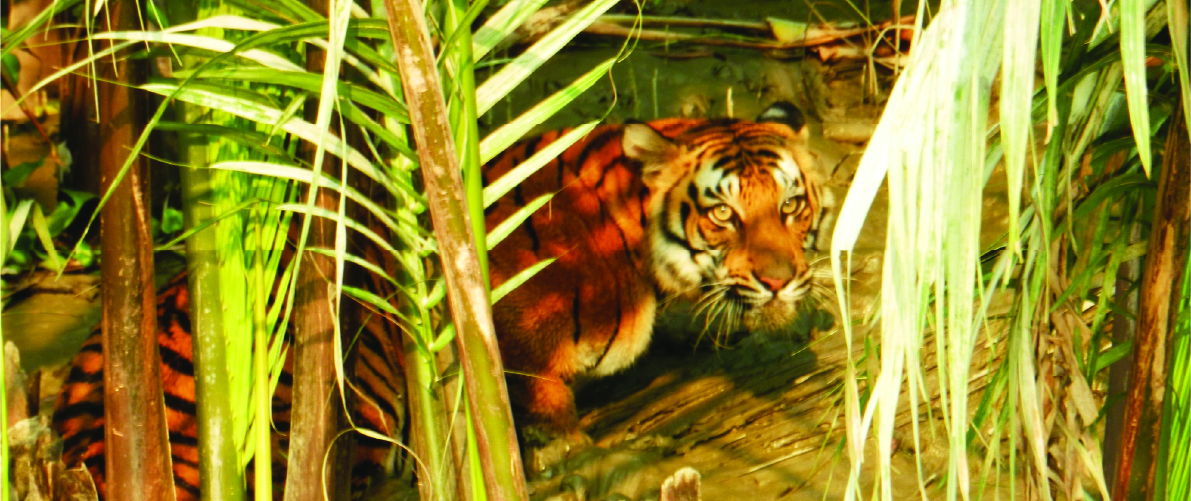 Tiger at the riverbank of the Sundarbans © Dr Md. Modinul Ahsan
Where Coexistence Is Still Being Tested
Global Tiger Day exists because the underlying crisis is far from resolved. The global wild tiger population has risen from roughly 3,200 in 2010 to an estimated 5,500 in 2024, according to WWF and the Global Tiger Forum, with countries including China, Russia, India and Nepal doubling their populations over that period (Xinhua, 2024). That is real recovery, but tigers have already disappeared from the wild in Cambodia, Laos and Vietnam, leaving breeding populations in only ten of the thirteen original tiger-range countries (New Age, 2024). Every Sundarbans tiger is therefore disproportionately important to the species' global future.
The pressures testing coexistence in Bangladesh are well documented: poaching of tigers and their principal prey, the spotted deer; unauthorized resource extraction inside protected forest blocks, particularly in the Satkhira range, where tiger numbers have actually declined even as the overall population grew (Prothom Alo, 2024); rising salinity linked to upstream water diversion and climate change; and increasingly frequent, severe cyclones. Between 2018 and 2024, nine tiger carcasses were recovered from the forest, a reminder that mortality, not only birth, shapes the census trend (Dhaka Tribune, 2024). Human-tiger conflict remains the sharpest edge of all this: a single straying tiger near a village can trigger fear and retaliation that undoes years of trust-building if not met with speed and transparency.
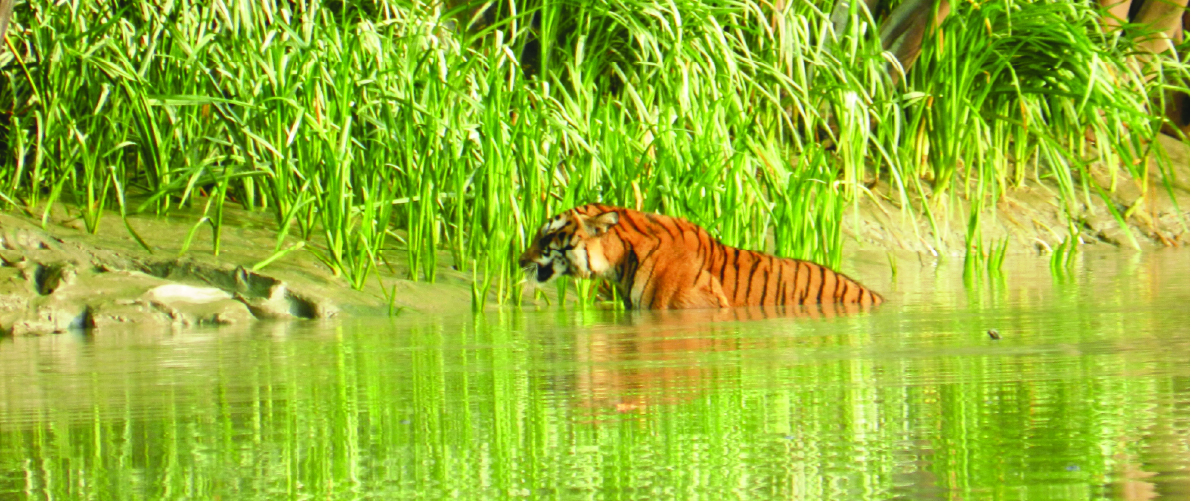 A tiger walking by the riverbank at the Sundarban © Dr Md. Modinul Ahsan
Arannayk Foundation's Role on the Ground
Much of the evidence base and institutional capacity behind Bangladesh's coexistence effort has been built by organizations working alongside the Forest Department, and Arannayk Foundation's portfolio illustrates what that support looks like in practice. Under the Bangladesh Forest Department's Sundarbans Tiger Conservation Project, Arannayk Foundation is monitoring 27 pre-identified crime hotspots across four forest ranges through camera trapping, generating evidence-based intelligence intended to strengthen patrol planning and law-enforcement response against tiger and deer poaching (Arannayk Foundation. n.d.-a).
The Foundation's work also extends into the planning frameworks that will shape the Sundarbans for the next decade. With the Center for Environmental and Geographic Information Services (CEGIS), Arannayk Foundation is supporting an updated Integrated Resource Management Plan for the Sundarbans Reserved Forests covering 2025 to 2035, and a related ecological monitoring initiative assessing forest health through physical, chemical and biological indicators (Arannayk Foundation, n.d.-c). A separate partnership with the Center for Natural Resources Studies is assessing the Sundarbans' aquatic resources, feeding directly into the prey-base and ecosystem-health questions that bear on how many tigers this forest can sustainably hold (Arannayk Foundation, n.d.-b).
Beyond the Sundarbans, Arannayk Foundation is implementing "Beyond Border: Securing Big Cats and Their Habitats across the Chittagong-Lushai Transboundary Landscape," funded by the KfW under the Integrated Tiger Habitat Conservation Program. The project targets the endangered Indo-Chinese clouded leopard and the leopard across Bangladesh's Chittagong Hill Tracts and India's Mizoram, in partnership with Aaranyak (India) and the Hill Flower (Rangamati) and Tahzingdong (Bandarban), combining habitat conservation and management, capacity building, scaling up of economic status of forests associated people, transboundary collaboration and conflict reduction across the project areas. It is not a tiger-specific corridor, but it sits within the same regional big-cat conservation architecture and reflects the same coexistence logic that underpins the Sundarbans work.
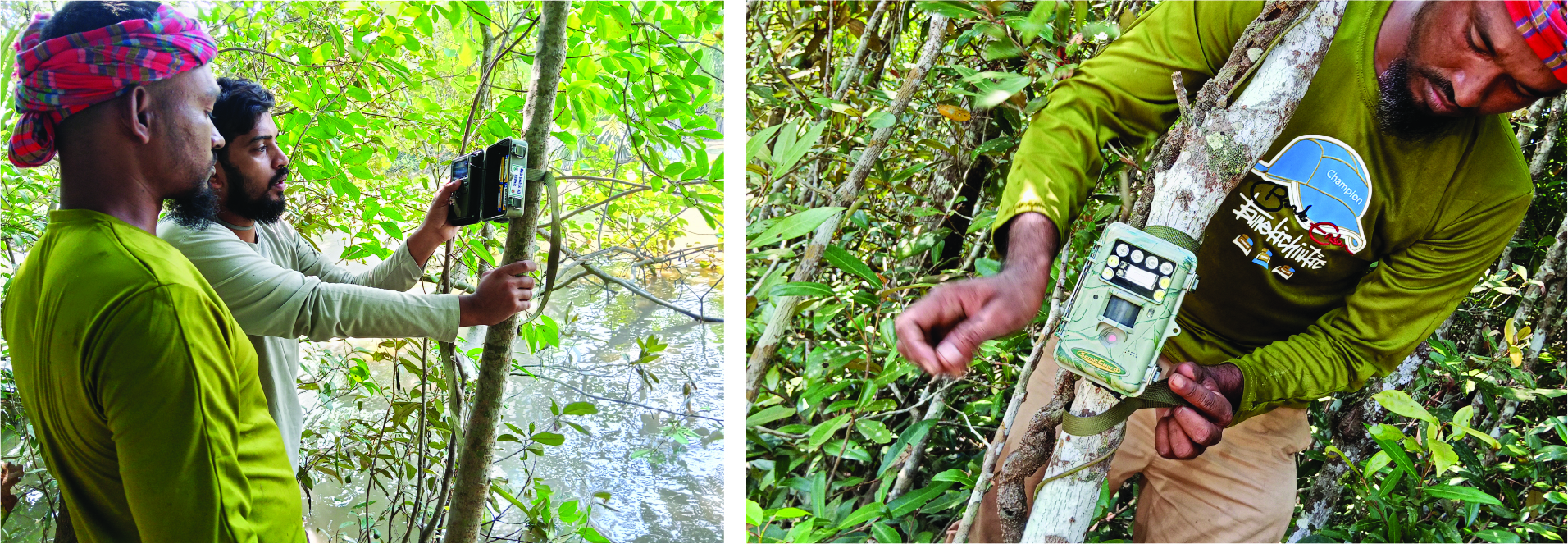 Setting up camera traps for ecological and crime hotspot monitoring © Dr Md. Modinul Ahsan
What the Theme Should Prompt in 2026
For a country whose forestry institutions have spent the past two years scaling up patrolling, refining conflict-response protocols and pursuing co-management frameworks, this year's observance is a moment to press the coexistence theme past its slogan form. Is prey-base recovery keeping pace with tiger population growth, or will density gains stall in ranges like Satkhira where prey and enforcement pressures diverge? Are the existing 60 kilometers of fencing sufficient, or does the geography of conflict demand a more adaptive approach along the forest's full periphery? And as salinity intrusion and cyclone frequency increase, does coexistence within the Sundarbans as currently bounded remain viable, or does the conversation need to widen toward landscape-level resilience planning that includes the communities living beyond the fence line too?
None of these questions diminish what the 2024 census confirmed: a population that has grown for three consecutive surveys, a species pulled back from the edge of local extinction that many feared just fifteen years ago. But if coexistence is genuinely this year's frame, honoring it well means measuring success not only in tiger numbers but in how safely, and how willingly, the people of the Sundarbans periphery are living alongside that recovery. That is the harder figure to report, and the one Global Tiger Day 2026 should really be asking Bangladesh to account for.
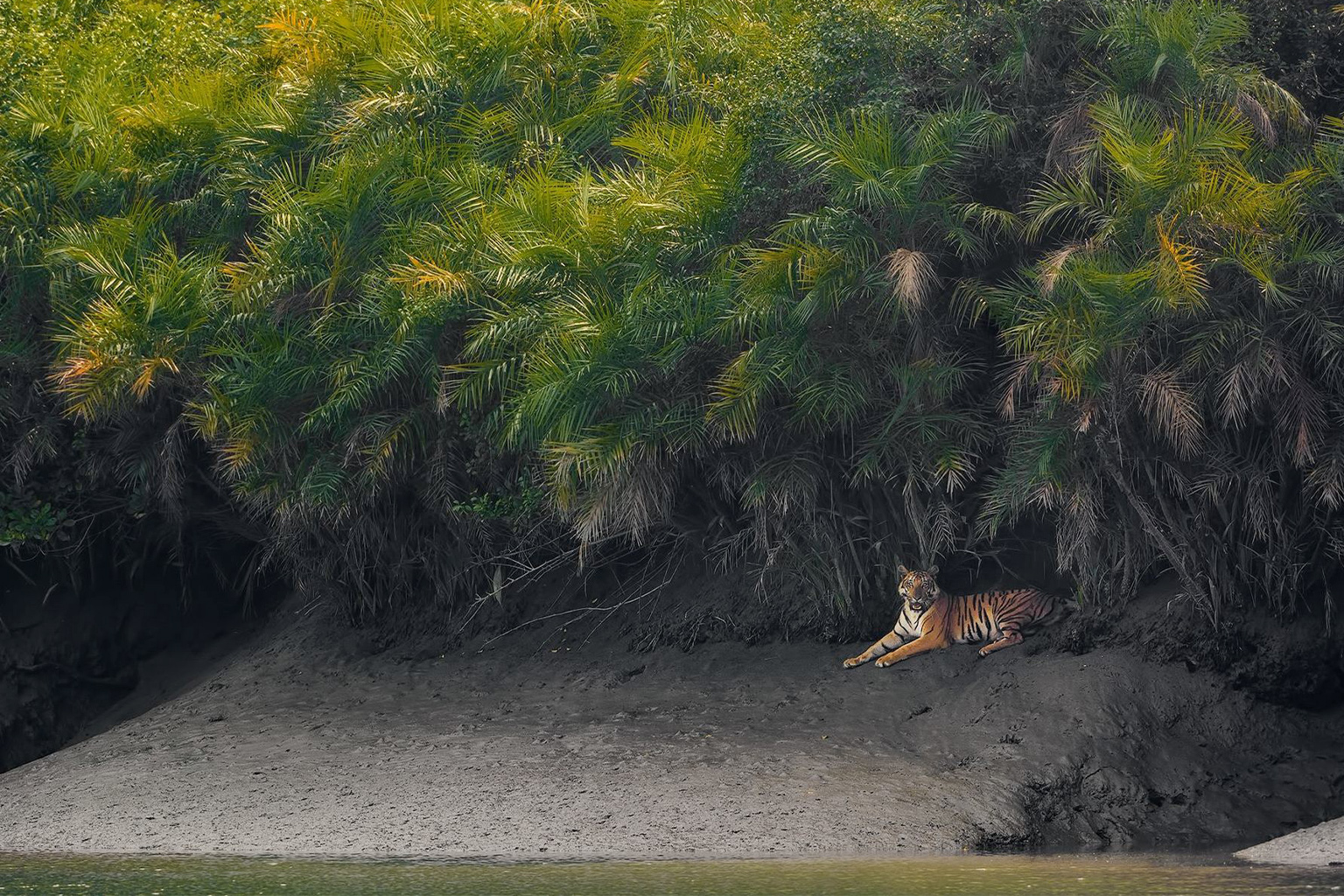 A Bengal tiger rests on a muddy bank at the edge of the Sundarbans © Anupam Mukherjee via Wikimedia Commons (CC BY-SA 4.0)
References
1. Arannayk Foundation. (n.d.-a). Survey: Monitoring 27 crime-prone hotspots for tiger and deer poaching in the Sundarbans through camera trapping. https://www.arannayk.org/projects/survey-monitoring-27-crime-prone-hotspots-for-tiger-and-deer-poaching-in-the-sundarbans-through-camera-trapping
2. Arannayk Foundation. (n.d.-b). Biodiversity conservation. https://www.arannayk.org/biodiversity-conservation
3. Arannayk Foundation. (n.d.-c). Beyond border: Securing big cats and their habitats across the Chittagong-Lushai transboundary landscape of Bangladesh and India. https://www.arannayk.org/projects/beyond-border-securing-big-cats-and-their-habitats-across-the-chittagong-lushai-transboundary-landscape-of-bangladesh-and-india
4. Business Standard. (2024a, October 8). Sundarbans tiger population rises by 11 to reach 125 in six years. https://www.tbsnews.net/bangladesh/sundarbans-tiger-population-rises-11-six-years-961431
5. Business Standard. (2024b, July 29). Sundarbans tiger population rises to 125, up by 19 in a decade. https://www.tbsnews.net/bangladesh/sundarbans-tiger-population-rises-125-19-decade-1199511
6. Dhaka Tribune. (2024, October 8). Tiger population in Sundarbans rises to 125. https://www.dhakatribune.com/bangladesh/361154/tiger-population-in-sundarbans-rises-to-125
7. International Union for Conservation of Nature. (2020, December 3). Beyond borders: How Bhutan and India are saving the tiger. https://iucn.org/news/protected-areas/202012/beyond-borders-how-bhutan-and-india-are-saving-tiger
8. Mongabay. (2026, July). Bangladesh gets ready for its first release of tiger rescued from poachers' trap. https://news.mongabay.com/2026/07/bangladesh-gets-ready-for-its-first-release-of-tiger-rescued-from-poachers-trap/
9. New Age. (2024, October 8). Number of tigers in Sundarbans increases to 125. https://www.newagebd.net/post/environment-climate-change/247222/number-of-tigers-in-sundarbans-increases-to-125
10. Prothom Alo. (2024, October 9). Tigers in the Sundarbans increase by 11, now 125 in total. https://en.prothomalo.com/bangladesh/opy7jdmvms
11. Xinhua. (2024, July 29). Global wild tiger population sees notable increase: WWF. https://english.news.cn/20240729/2db5433fcf9b4c76a302da698f1e578d/c.html


Comments