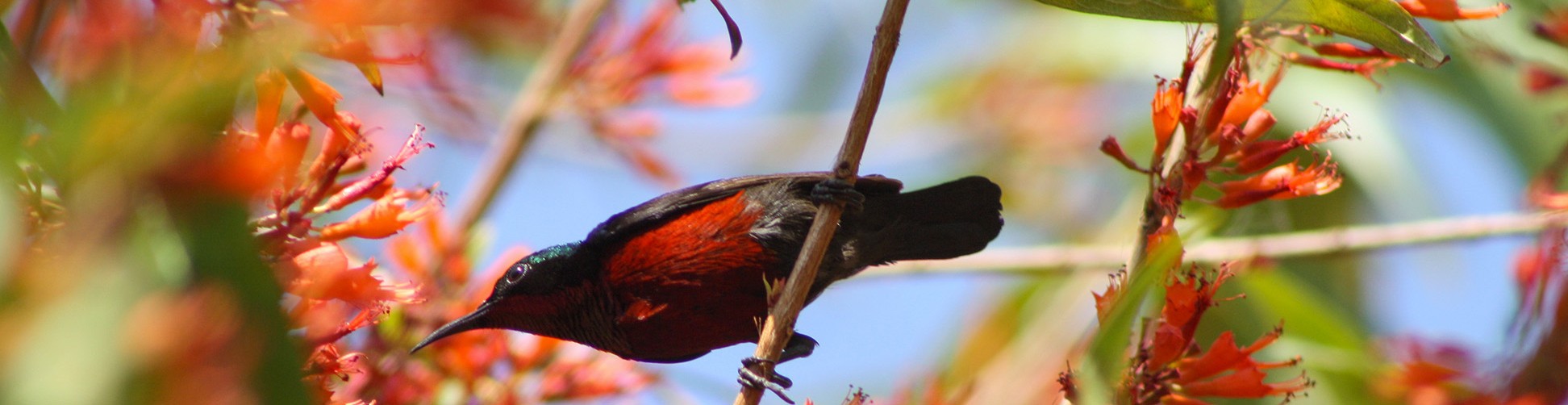
 © Md. Tarik Kabir
Biodiversity is not just about forests and wildlife. It lives in the clean air we breathe, the fish on our plates, and the plants once used as medicine in every village home. But across Bangladesh, these lifelines are disappearing quietly. From polluted rivers to shrinking elephant habitats, the damage is no longer distant. This blog explores why biodiversity loss matters to everyday life and how local action, can shape global change.
World Biodiversity Day (22 May) is a global observance highlighting the urgent need to conserve biodiversity. It underpins food, water, medicine, climate regulation, and disaster protection. Yet biodiversity is declining at unprecedented rates due to deforestation, pollution, overexploitation, and climate change. Nearly one million species face extinction, threatening human wellbeing (IPBES, 2019). The 2026 theme, “Acting Locally for Global Impact,” emphasizes that while biodiversity loss is global, solutions must emerge locally where ecosystems are managed and lived in. For Bangladesh, biodiversity conservation is inseparable from sustainable development, poverty reduction, and climate resilience.
When Nature Felt Like Life Itself
Personal reflections illustrate how biodiversity is woven into everyday life. Villagers rely on wetlands and forests for clean water, cooler air, and medicinal plants like neem, basak, kalomegh, and haritaki. Childhood memories of natural remedies durba grass for wounds, kalokeshi for hair health show biodiversity as a living health system. Loss begins not with species extinction but with the erosion of everyday ecological services.
Global Biodiversity Crisis
Species extinction rates are now tens to hundreds of times higher than natural background levels. Drivers include land-use change, exploitation, pollution, climate change, and invasive species (IPBES, 2019). These pressures reinforce each other, degrading forests, wetlands, rivers, and marine ecosystems. Consequences include weakened resilience, reduced food security, increased disaster vulnerability, and public health risks. Bangladesh exemplifies this crisis: elephant habitats fragmented in the Hill Tracts, wetlands lost to urban expansion, and rivers polluted by industry. The Kunming–Montreal Global Biodiversity Framework (2022) set ambitious targets 30% ecosystem protection by 2030 (CBD, 2022), but success depends on local implementation.
 Spoon-billed Sandpiper © Sayam U. Chowdhury
Biodiversity Significance of Bangladesh
Bangladesh lies at the intersection of Indo-Himalayan and Indo-Burmese regions, hosting 138 mammals, 700+ birds, 160 reptiles, 50 amphibians, and thousands of plants (IUCN Bangladesh, 2016). Key ecosystems include:
Despite richness, threats from logging, overfishing, pollution, and climate change are accelerating. Conservation is essential for ecological stability and national resilience.
Why Conservation Matters
Biodiversity supports health, livelihoods, and culture. Forests and wetlands filter air and water, reducing disease risks. Medicinal plants remain vital in rural healthcare. Fisheries, forestry, and agriculture sustain millions. Ecotourism generates jobs and awareness. Community-based conservation strengthens social cohesion, while biodiversity is deeply tied to traditions and spirituality. Loss undermines health security, economic sustainability, and cultural continuity.
Acting Locally for Global Impact
Local stewardship is the foundation of conservation. In Bangladesh, co-management systems in protected areas reduce illegal logging and poaching. Community patrols protect migratory birds, while mangrove plantations restore biodiversity and shield coasts. Linking livelihoods with conservation through eco-tourism, crab fattening, handicrafts, and nurseries builds support. Small local actions like reforestation, plastic reduction, and sustainable agriculture collectively generate global impact.
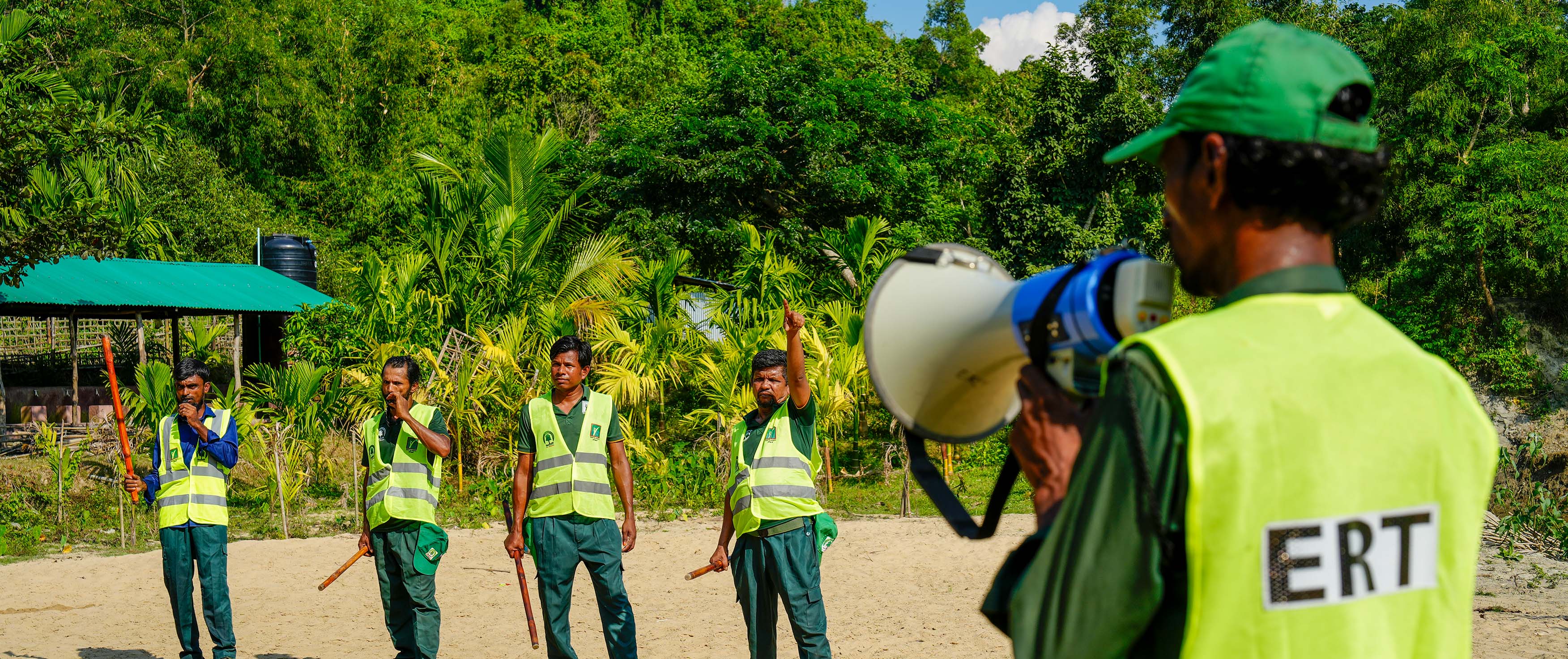 An Elephant Response Team in Ukhiya, Cox's Bazar © Arannayk Foundation/Arifur Rahman
Role of Arannayk Foundation
Arannayk Foundation translates global commitments into local action. It promotes ecosystem-based approaches integrating biodiversity with climate adaptation and livelihoods. Examples include:
Its work embodies the 2026 theme, showing how empowered communities create global impact.
Biodiversity and Climate Change
Healthy ecosystems regulate climate, while climate change accelerates biodiversity loss. Mangroves, forests, and wetlands act as carbon sinks and buffers against disasters (The New Humanitarian, 2008). Yet sea-level rise, salinity intrusion, erratic rainfall, and cyclones threaten ecosystems and livelihoods. Nature-based solutions restoring mangroves, conserving forests, protecting wetlands are cost-effective strategies for resilience. Integrated approaches are essential for Bangladesh’s future.
Indigenous Knowledge and Youth
Indigenous communities in the Hill Tracts maintain agroforestry systems and sacred forest patches. Fishing communities hold detailed ecological knowledge. Integrating this with science strengthens management. Youth are increasingly engaged in activism, restoration, and awareness campaigns. Their leadership is vital for future conservation.
World Biodiversity Day 2026 reminds us that global conservation depends on local action. For Bangladesh, protecting ecosystems like Sundarbans, wetlands, and hill forests is essential for food security, climate resilience, and wellbeing. Organizations like Arannayk Foundation demonstrate how community-centered approaches connect local realities with global goals. Ultimately, biodiversity conservation begins where people live and interact with nature, local action is the foundation of global survival.
References
CBD. (2022). Kunming-Montreal Global Biodiversity Framework. Convention on Biological Diversity, COP15, Montreal, Canada. https://www.cbd.int/gbf
IPBES. (2019). Global assessment report on biodiversity and ecosystem services of the Intergovernmental Science-Policy Platform on Biodiversity and Ecosystem Services. E. S. Brondizio, J. Settele, S. Díaz, & H. T. Ngo (Eds.). IPBES Secretariat. https://www.ipbes.net/node/35234
IUCN Bangladesh. (2012). Biodiversity of Tanguar Haor: A Ramsar site of Bangladesh, Volume I: Wildlife. International Union for Conservation of Nature, Bangladesh Country Office. https://portals.iucn.org/library/sites/library/files/documents/2012-021-v.3.pdf
IUCN Bangladesh. (2016). Bangladesh species red list: 31 regionally extinct and 390 threatened animal species. International Union for Conservation of Nature. https://iucn.org/news/bangladesh/201607/bangladesh-red-list-reports-31-regionally-extinct-and-390-threatened-animal-species
The New Humanitarian. (2008). Bangladesh: Drop in tiger population signals environmental degradation. https://www.thenewhumanitarian.org/report/79765/bangladesh-drop-tiger-population-signals-environmental-degradation
UNESCO World Heritage Centre. (2020). The Sundarbans, Bangladesh (World Heritage Site). United Nations Educational, Scientific and Cultural Organization. https://whc.unesco.org/en/list/798
Wikipedia. (2024). Tanguar Haor. Wikimedia Foundation. https://en.wikipedia.org/wiki/Tanguar_Haor
* The opinions expressed here are the author’s own and do not represent the official views of Arannayk Foundation.
Comments